

Self-development
Development shouldn’t stall between 1:1s. With AI Coaching, people practice and test their skills on their own, in a low-pressure space, so the time later spent with a human coach goes toward the harder gap that AI can’t fill, instead of ground they could have covered alone.
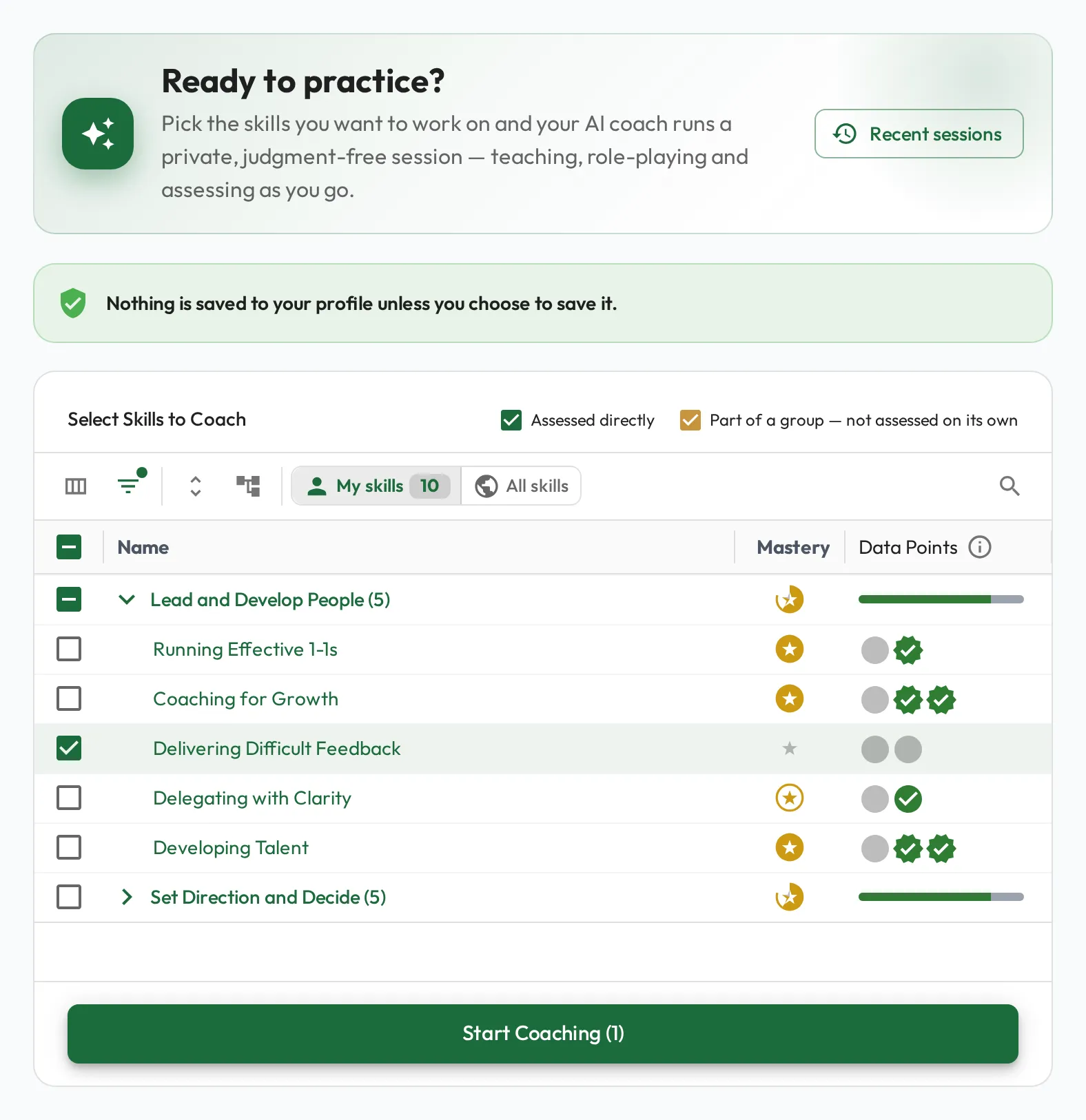
How a person uses it
Section titled “How a person uses it”It’s one natural conversation. The AI coach teaches the skill, gives examples, and answers questions the way a good tutor would, while quietly forming an assessment of where the person stands. Because it’s grounded in your organization’s own skills, playbooks, and context (and any custom AI Coaches you’ve built), the coaching is tailored, not generic.
Feed the results into coaching
Section titled “Feed the results into coaching”When a person has covered a skill well, the coach offers a short summary and asks whether to save it. Saved results appear in the AI column on their profile; nothing is recorded unless they say yes.
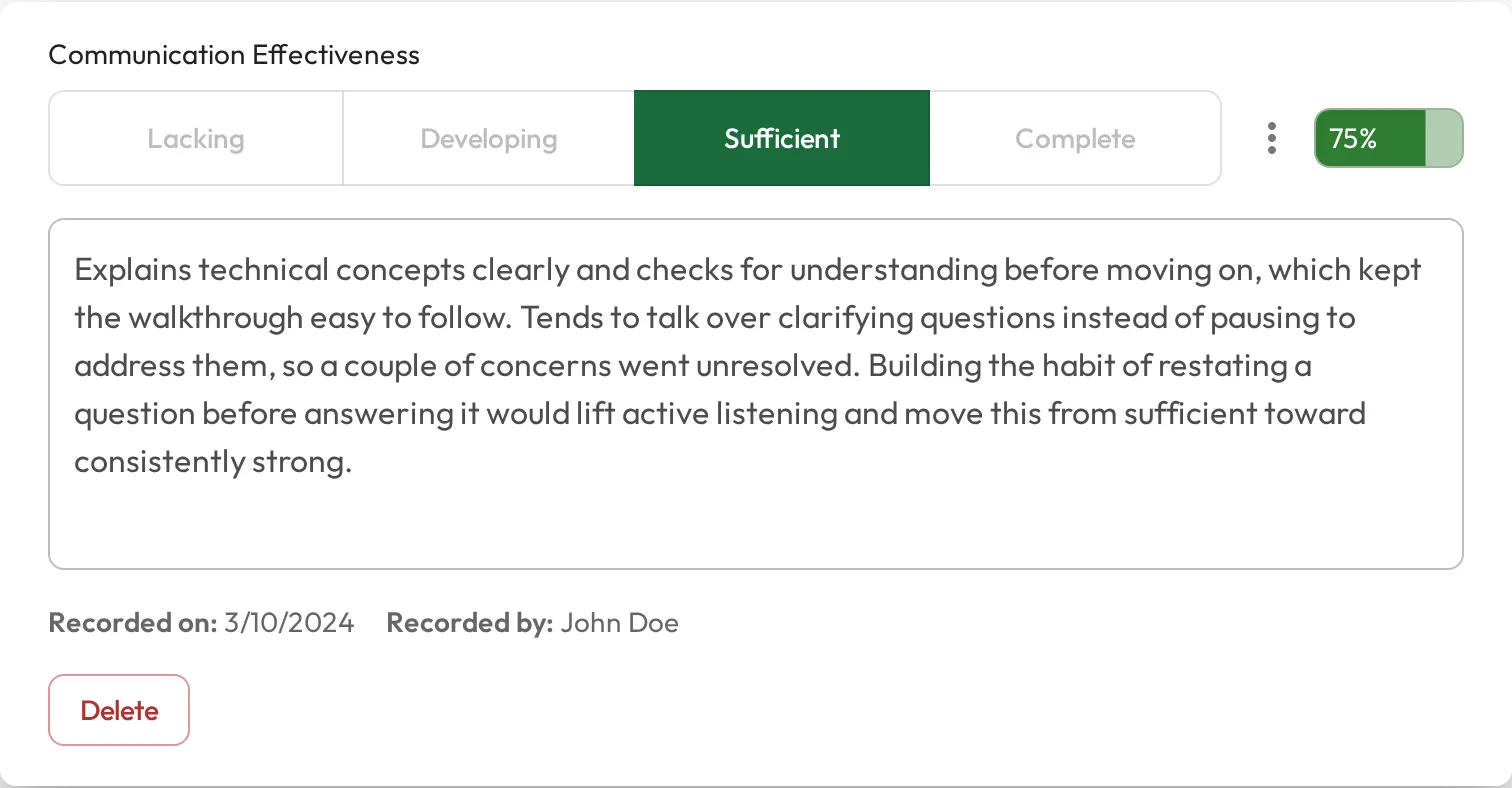
This is what makes self-coaching a genuine supplement to 1:1s: the person arrives at the session having already practiced and self-assessed, so you spend the human time on what’s left. Use their AI-graded results as the starting point for the conversation, then coach the gap.
For how AI scores roll up alongside coach and self assessments, see Calculating mastery.