

Career planning
A role sets the baseline for the job someone holds today. Career planning is how you develop a person beyond that baseline, toward a stretch goal, a promotion, or a growth area, and build the evidence that the move is earned.
Run it
Section titled “Run it”-
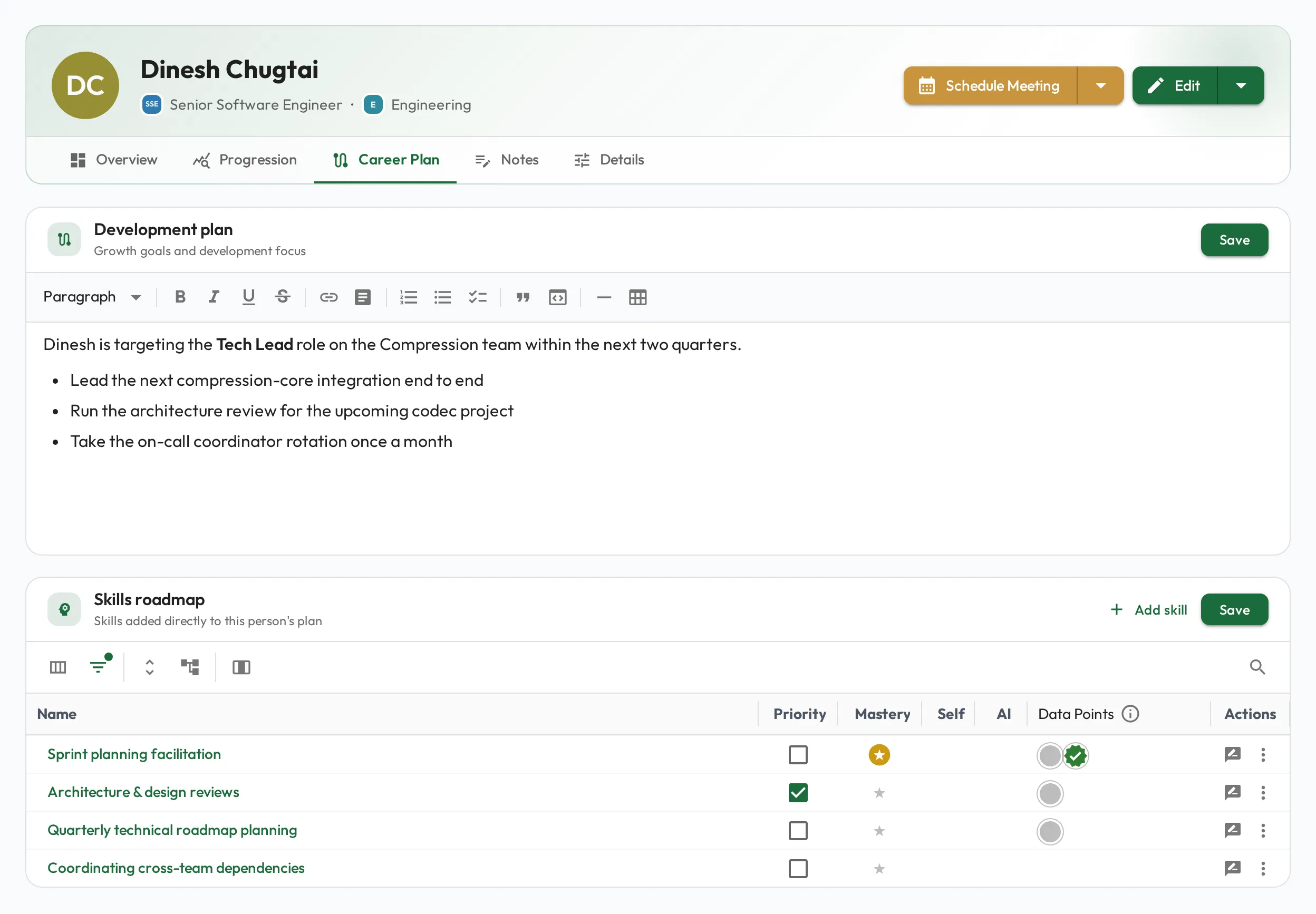
Write the development plan. Each person has an open-ended, markdown development plan: where they’re headed and the path to get there. Use it to make growth conversations concrete and keep the direction visible between sessions.
-
Assign the next role’s skills early. Pull skills from the role they’re growing toward and assign them directly, independent of their current role. They appear on the profile alongside role-inherited skills, so you can start assessing next-role expectations now.
-
Coach and assess them like any other skill. In your regular 1:1 Meetings, score the next-role skills as they come up. Readiness builds observation by observation.
-
Promote on evidence, not impression. When someone is proficient in their current role’s skills and is showing solid mastery of the next role’s, the case is already made, backed by observations rather than a gut call.
Track readiness over time
Section titled “Track readiness over time”The Career Plan grid shows mastery building on the next-role skills, and the mastery progression chart shows the velocity. At review time, that history turns “are they ready?” into a question you can answer from the record. See Performance reviews.